
Crane Inspection FAQs
Routine, third-party, 10-year and 25-year crane inspections explained
🔧 Book Your Crane Inspection Today
Need a third-party inspection, safety upgrade, or major repair? Contact Safe Lifting Australia to schedule a service or get a tailored quote. We make compliance easy — with expert inspections, comprehensive repairs, and full documentation.
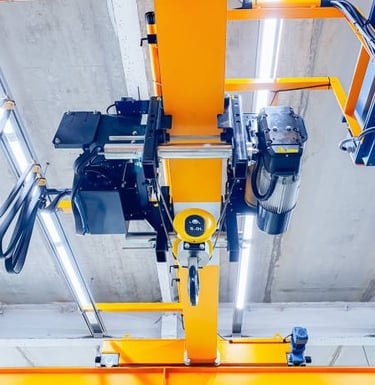
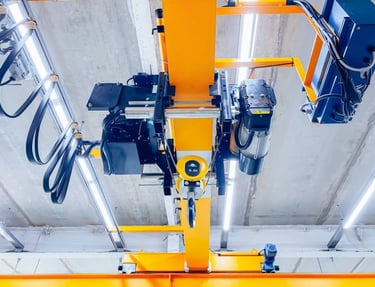
What is a routine crane inspection?
Routine crane inspections are frequent operational checks intended to confirm a crane remains safe for continued service between more detailed inspections.
Typically include:
Functional testing of controls, brakes, and emergency stops
Inspection of safety switches and interlocks
Visual checks of wire ropes, chains, hooks, and sheaves
Lubrication checks and fluid levels
Review of logbooks and recorded defects
Not intended to assess:
Structural fatigue
Remaining service life
Long-term suitability for operation
What is a third-party crane inspection?
A third-party crane inspection is an independent inspection performed by a provider not responsible for routine servicing or maintenance.
Commonly used to:
Provide independent verification of condition or compliance
Includes the same inspection as routine and can include usage review
Review previous inspection or rectification work
Assess higher-risk or ageing cranes
Provides:
Objectivity
Audit defensibility
Independent technical judgement
What is a 10-year crane inspection?
A 10-year crane inspection is a major inspection intended to assess crane condition beyond routine service checks.
Typically includes:
Detailed mechanical inspection (wheels, gearboxes, motors, hook, shafts)
Assessment of fatigue-critical areas - NDT
Measurement of wear, deformation, and tolerances
Review of operating history and duty classification
Identification of latent defects not visible during routine inspections
Reporting
Includes recommendations regarding components and replacement or refurbishment
What is a 25-year crane inspection?
A 25-year crane inspection is a critical lifecycle assessment of a crane’s suitability for continued safe operation.
At this stage, cranes are often:
At or beyond their original Design Working Period (DWP)
Subject to cumulative fatigue and degradation
Typically includes:
Comprehensive structural and mechanical inspection
Detailed inspection of fatigue-critical components
Review of historical loading and abnormal events
Clear recommendations on:
Continued operation
Rectification
Derating
Life extension
Replacement planning
ABN: 85 674 428 098


GLOBAL OPERATIONS
Safe Lifting Australia Pty Ltd
Crane Inspection, Certification & Engineering Support
Across Australia and the Asia-Pacific Region - Over 100 Years Combined Crane & Lifting Industry Experience
☎ 1300 141 109
☎ +61 1300 141 109 (International)
✉ service@safelifting.com.au
Head Office Perth, Western Australia
Directors
Matt Weight - 0473 874 474
Dan Curchin - 0439 094 755
TRUSTED TO PERFORM IN HEAVY INDUSTRY
© 2026 Safe Lifting Australia Pty Ltd
All Rights Reserved
ISO 9001:2015 Certified | LEEA Member | Offshore & Overhead Crane Specialists
Projects completed across mining, offshore, defence and industrial sectors.



