

10 Year & 25 Year Major Crane Inspections
Major Crane Inspections, DWP Assessments & Lifecycle Evaluations
Safe Lifting Australia provides specialist 10-year crane inspections, 25-year crane inspections, Design Working Period (DWP) assessments and major crane inspections for overhead cranes, gantry cranes, monorails, jib cranes and process cranes throughout Australia.
Our experienced inspectors and engineers assist asset owners with crane lifecycle assessments, structural evaluations, mechanical inspections and compliance reporting in accordance with AS 2550, AS 1418 and applicable industry standards. Whether your crane is approaching a major inspection milestone or requires an end-of-life assessment, we can provide practical recommendations to maximise safety, reliability and asset life.
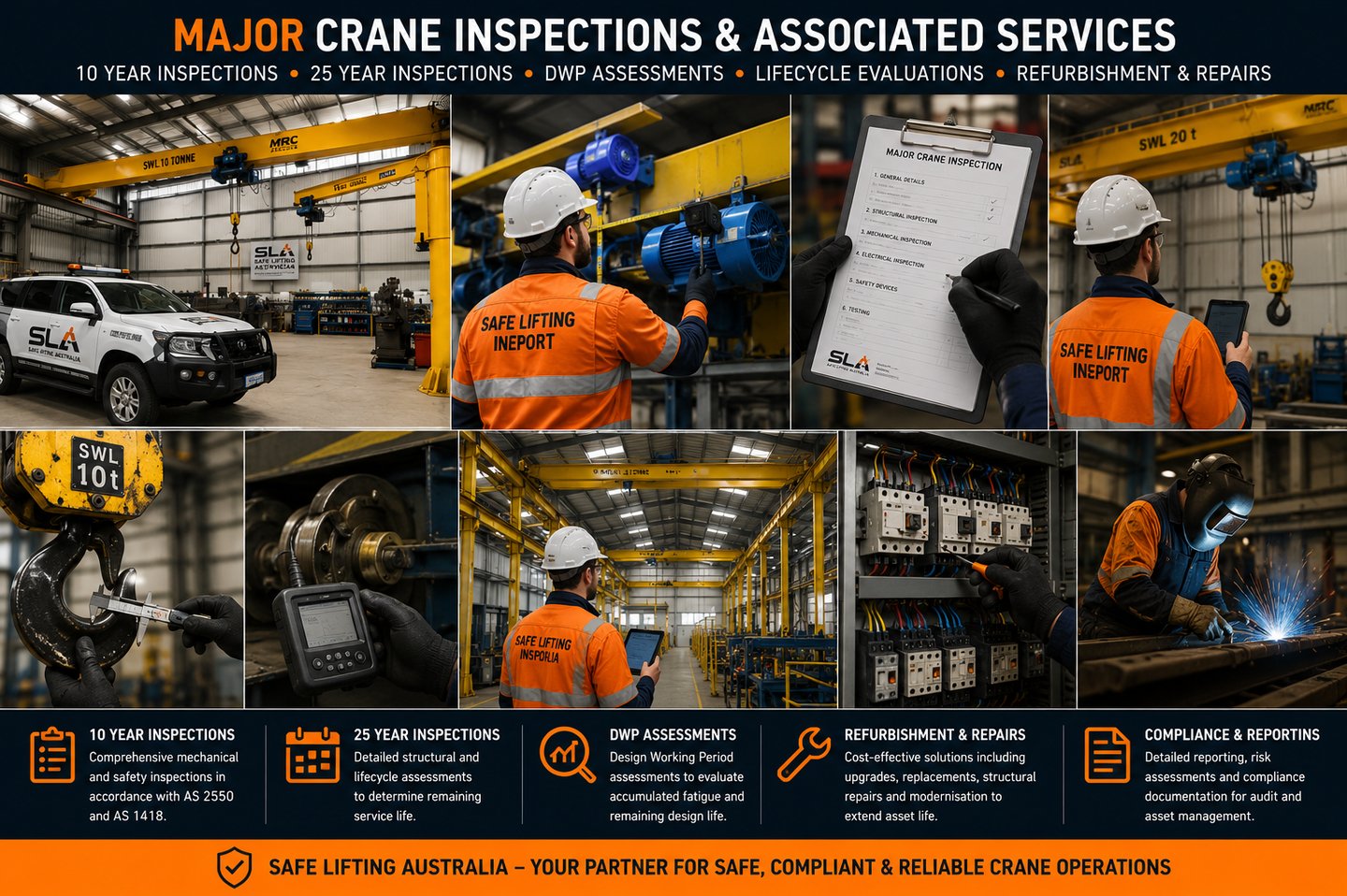
Major Inspection Services
10 Year Major Inspection
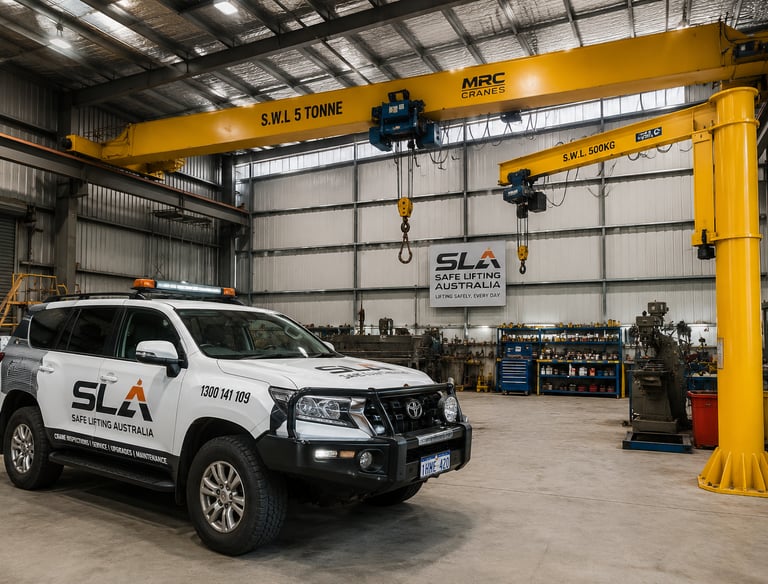
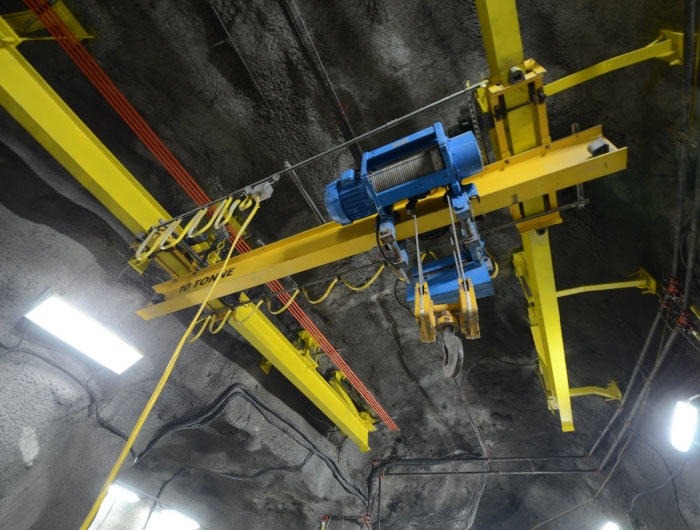
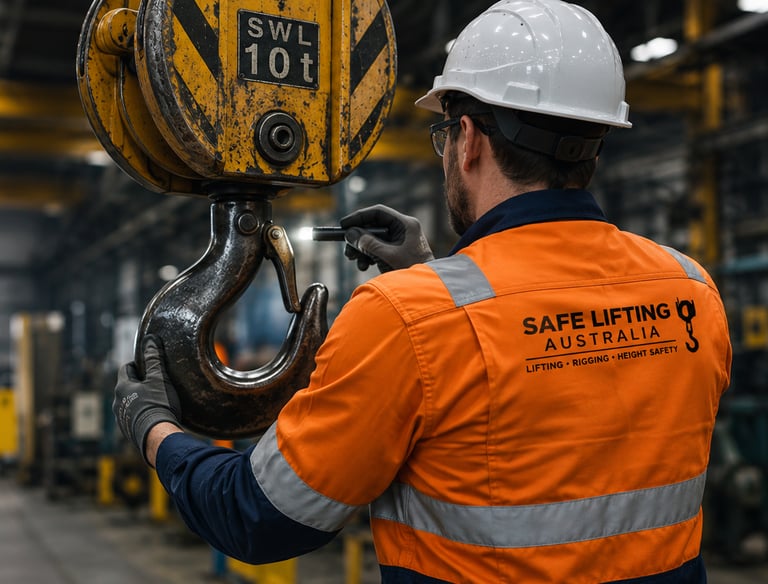
A 10-year crane inspection is a major mechanical and safety assessment completed in accordance with AS 2550 and AS 1418 to verify the ongoing safe operation and compliance of an overhead crane. The inspection goes beyond routine servicing and focuses on wear, fatigue, safety systems, and operational condition.
Key Inclusions
Detailed mechanical inspection of hoists, brakes, motors, gearboxes, and drives
Structural inspection of girders, end carriages, welds, and crane components
Electrical and control system assessment including limits, isolators, and pendant stations
Inspection of wire ropes, sheaves, hooks, wheels, and runway interfaces
Compliance reporting with recommendations for repairs, upgrades, or continued service
25 Year Major Inspection
A 25-year crane inspection is an advanced structural and lifecycle assessment completed to determine the ongoing fitness-for-service of ageing crane assets. These inspections focus heavily on fatigue, structural integrity, duty history, and remaining design life.
Key Inclusions
Structural and fatigue assessment of critical load-bearing components
Engineering review of crane condition, modifications, and operational history
NDT recommendations and inspection of fatigue-prone or high-stress areas
Assessment of remaining service life and refurbishment requirements
Audit-ready reporting supporting continued operation, overhaul, or de-rating decisions
Crane overhauls restore ageing crane systems to improve reliability, safety, and operational performance. Overhauls may include mechanical refurbishment, electrical upgrades, structural rectification, and modernisation of obsolete components.
Key Inclusions
Replacement or refurbishment of hoists, motors, brakes, wheels, and gearboxes
Electrical upgrades including controls, festoons, radios, and VSD systems
Structural repairs, runway rectification, and fatigue repairs where required
Load testing, commissioning, and return-to-service certification
Modernisation solutions to extend crane life and improve operational reliability
General Overhaul
What Is A Major Crane Inspection?
A major crane inspection is a detailed engineering and mechanical assessment completed at specific lifecycle intervals to verify the continued safe operation of a crane.
Unlike routine servicing, a major crane inspection focuses on structural integrity, mechanical condition, fatigue risk, safety systems and remaining service life.
Major inspections commonly occur at:
10 Years
25 Years
Following major overload events
Following significant structural repairs
During refurbishment projects
Prior to life extension programs
These inspections assist asset owners in making informed decisions regarding continued operation, refurbishment or replacement.
10 Year Crane Inspections
A 10-year crane inspection is a comprehensive mechanical and safety assessment performed in accordance with AS 2550 and AS 1418 requirements.
The purpose of a 10-year inspection is to evaluate the overall condition of the crane and identify wear, deterioration or developing issues before they impact safety or reliability.
Typical Inspection Scope
Hoists and winches
Motors and gearboxes
Brakes and drives
Wheels and end carriages
Hooks and hook blocks
Wire ropes and sheaves
Electrical systems
Pendant stations and radio controls
Limit switches and safety devices
Structural inspection of crane components
A detailed inspection report is issued including recommendations for repairs, upgrades and ongoing maintenance.
25 Year Crane Inspections
A 25-year crane inspection is a detailed structural and lifecycle assessment designed to determine whether an ageing crane remains fit for continued service.
These inspections focus heavily on fatigue, structural integrity and remaining design life.
Typical Inspection Scope
Structural condition assessment
Fatigue assessment
Inspection of critical load-bearing components
Review of historical modifications
Operational duty review
DWP assessment
NDT recommendations
Engineering review
Remaining service life evaluation
The findings provide asset owners with a defensible basis for continued operation, refurbishment or de-rating decisions.
Design Working Period (DWP) Assessments
A Design Working Period assessment evaluates the accumulated fatigue life of a crane based on actual operating history rather than simply age.
DWP assessments consider:
Lifting cycles
Load spectrum
Duty classification
Operational history
Previous modifications
Historical inspections
A DWP assessment helps determine whether a crane has remaining design life available or requires engineering intervention.
Crane Refurbishment & Life Extension Programs
Many cranes approaching 10-year or 25-year inspection milestones can be successfully refurbished and returned to service.
Refurbishment programs may include:
Hoist replacement
Brake upgrades
Motor replacement
Gearbox replacement
Electrical modernisation
Structural repairs
Runway rectification
Load testing
Recommissioning
These programs often provide a significantly lower-cost alternative to complete crane replacement.
Where We Operate
Safe Lifting Australia regularly provides crane inspections, servicing, and major inspections throughout regional WA and Tasmania including Karratha, Port Hedland, Pilbara, Geraldton, Bunbury, Kalgoorlie, Albany, Henderson and Hobart.
Frequently Asked Questions – Crane Inspections
How often should a crane undergo a major inspection?
Major inspection requirements vary depending on crane type, utilisation and applicable standards. Overhead cranes are commonly subject to major inspections at 10-year and 25-year milestones in accordance with AS 2550 and AS 1418.
What is a 10 year crane inspection?
A 10 year crane inspection is a comprehensive assessment of the crane's mechanical, structural and safety systems. It focuses on identifying wear, fatigue, deterioration and safety-related defects that may not be identified during routine servicing.
What is a 25 year crane inspection?
A 25 year crane inspection is a detailed lifecycle assessment that evaluates structural integrity, fatigue condition and remaining service life. These inspections often involve engineering review and may be supported by NDT and DWP assessments.
What is included in a major crane inspection?
A major crane inspection typically includes assessment of structural components, hoists, gearboxes, motors, brakes, hooks, wire ropes, sheaves, wheels, end carriages, electrical systems, safety devices and operational functions.
What is a DWP assessment?
A Design Working Period (DWP) assessment evaluates the accumulated fatigue life of a crane based on actual operating history, load cycles and duty classification. The assessment helps determine the remaining safe service life of the asset.
Does every crane require a DWP assessment?
Not necessarily. The requirement for a DWP assessment depends on the crane's age, duty classification, operating history and inspection findings. A competent engineer can determine whether a DWP assessment is appropriate.
Can a crane continue operating after a 25 year inspection?
In many cases, yes. A 25 year inspection is designed to determine whether the crane remains fit for service. Many cranes continue operating safely for decades after a successful inspection and any required repairs or upgrades.
What happens if structural defects are found?
Structural defects are documented and assessed according to their severity. Recommendations may include monitoring, repair, engineering assessment, load restrictions or component replacement depending on the findings.
Do major inspections require NDT?
Not always, however NDT is commonly recommended where fatigue, cracking or structural concerns are suspected. Techniques may include Magnetic Particle Testing (MPI), Ultrasonic Testing (UT), Dye Penetrant Testing (DPI) and other specialised methods.
Can Safe Lifting Australia perform the repairs identified during the inspection?
Yes. Safe Lifting Australia can provide repair, refurbishment, upgrade and recommissioning services following major inspections, allowing defects and recommendations to be addressed by the same team that completed the assessment.
Do you inspect gantry cranes and monorails?
Yes. We provide major inspections for overhead cranes, gantry cranes, monorails, jib cranes, workshop cranes, process cranes and specialised lifting equipment.
Do you provide major crane inspections outside Perth?
Yes. Safe Lifting Australia performs major crane inspections throughout Western Australia, Tasmania and regional Australia, including shutdown projects, mining operations and remote industrial sites.
☎ 1300 141 109
☎ +61 1300 141 109 (International)
✉ service@safelifting.com.au
Inspection, maintenance, engineering, training and lifting solutions across Australia.
Explore Our Services
ABN: 85 674 428 098


GLOBAL OPERATIONS
Safe Lifting Australia Pty Ltd
Crane Inspection, Certification & Engineering Support
Across Australia and the Asia-Pacific Region - Over 100 Years Combined Crane & Lifting Industry Experience
☎ 1300 141 109
☎ +61 1300 141 109 (International)
✉ service@safelifting.com.au
Head Office Perth, Western Australia
Directors
Matt Weight - 0473 874 474
Dan Curchin - 0439 094 755
TRUSTED TO PERFORM IN HEAVY INDUSTRY
© 2026 Safe Lifting Australia Pty Ltd
All Rights Reserved
ISO 9001:2015 Certified | LEEA Member | Offshore & Overhead Crane Specialists
Projects completed across mining, offshore, defence and industrial sectors.



